
Stamp and Seal Impression Found in Jerusalem Points to Restoration of City During Times of Ezra, Nehemiah
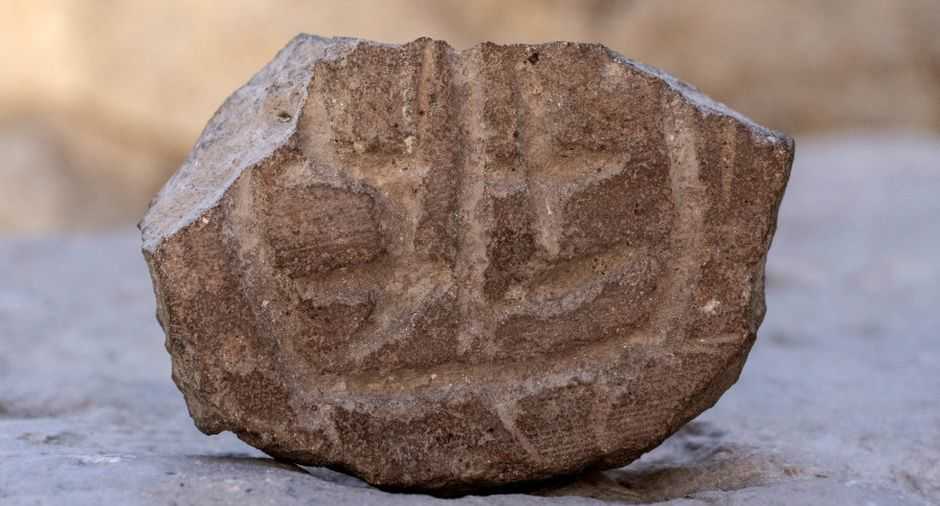
JERUSALEM — An excavation in Jerusalem Walls National Park that yielded a rare stamp and seal impression dating back to the Persian era is stated to provide evidence for the restoration of Jerusalem during the times of Ezra and Nehemiah, as chronicled in the Scriptures.
“The finding of the stamp and seal impression in the City of David indicates that despite the city’s dire situation after the destruction, efforts were made to restore the administrative authorities to normal, and its residents continued to use the structures that were destroyed partly,” stated Prof. Yuval Gadot of the Department of Archaeology and Ancient Near Eastern Cultures at Tel Aviv University, and Dr. Yiftah Shalev, of the Israel Antiquities Authority.
The Antiquities Authority recently announced the discovery, which was uncovered in the Givati parking lot area of the National Park next to rubble from a structure razed during the Babylonian destruction of Jerusalem.
Gadot and Shalev state that it is rare to find artifacts from the Persian Period, and few of this type have been found in Israel.
The impression was found on what is known as a bulla, a clay seal used by administrative authorities to sign documents and to keep them sealed until they reach their destination. They were also sometimes used as seals on storage jugs for food received as a tax.
“The double seal impression was discovered on a large piece of clay. The size of the clay piece, about 4.5 cm, indicates that it was used to seal a large container — perhaps a jar — and not a document,” the Antiquities Authority outlines.
“The imprint bears the image of a person sitting on a large chair with one or two columns in front of him. The design of the image is indicative of Babylonian-style composition. The character is probably a king, and the columns are the symbols that represent the gods Nabu and Marduk.”
The unearthed stamp was made of a large pottery shard and features some sort of linear inscription.
“The engravings probably represent two characters, and it may be a pseudo-epigraphic seal (bearing drawings designed to resemble letters),” the Antiquities Authority states. “On the other side of the seal is a fragment, which may be indicative of a handle that was attached to it in the past. The size of the seal, about 8 cm in diameter, indicates that it was used to seal large objects.”
“Discovering the new findings on the western slope of the City of David adds much information about the city’s structure during the period of the Return to Zion, a period we knew about mainly from Biblical literature (the books of Ezra and Nehemiah),” Gadot and Shalev state.
“The paucity of the findings from this period made it difficult to understand the status and extent of the city. The findings from the Givati Parking Lot Excavation shed light on the renewal of the local administration, in a location similar to the one that existed before the destruction of the First Temple, about 100 years prior.”
Read the announcement from the Israel Antiquities Authority here.
According to Scripture, Nehemiah was moved to tears after asking about the status of Jerusalem — hearing that the walls had been toppled and its gates had been burned during the Babylonian invasion, which also destroyed the First Temple and sent the people of Israel into captivity and exile for 50 years.
He prayed to God about the matter and was moved to rebuild the ravaged city.
“Ye see the distress that we are in, how Jerusalem lieth waste, and the gates thereof are burned with fire: come, and let us build up the wall of Jerusalem, that we be no more a reproach,” Nehemiah 2:17-18 reads. “Then I told them of the hand of my God which was good upon me, as also the king’s words that he had spoken unto me. And they said, ‘Let us rise up and build.’ So they strengthened their hands for this good work.”
Nehemiah had served as a cupbearer to Persian King Artaxerxes and obtained permission to travel to Jerusalem to rebuild. The work was done in 52 days as each man worked together in rebuild the wall directly in front of his home. Nehemiah became governor of Judah during this time.
Prior to this, Cyrus the Great, who conquered the Babylonians, let the people return to their homeland to repopulate and helped to pay for the rebuilding of the temple.
“Thus saith Cyrus king of Persia, ‘The Lord God of Heaven hath given me all the kingdoms of the Earth, and He hath charged me to build him an house at Jerusalem, which is in Judah. Who is there among you of all His people? His God be with him, and let him go up to Jerusalem, which is in Judah, and build the house of the Lord God of Israel (He is God,) which is in Jerusalem,’” Ezra 1:2-3 states.
Ezra, a priest and teacher of the Law, called a gathering after the walls of Jerusalem were rebuilt, as he read aloud the Laws of God, and the people, listening intently, wept and bowed their face to the ground.
Christian News Network reached out to the Pennsylvania-based Associates for Biblical Research (ABR) for their insight into the finds.
Dr. Gary Byers, ABR Senior Archaeologist and dean of the College of Archaeology at Trinity Southwest University in Albuquerque, New Mexico, explained that the artifacts “were dug from debris almost directly across from where ruins of King David’s palace likely stood on the hill’s eastern slope.”
He also explained that in regard to the bulla, “[u]sing a broken sherd was an uncommon and inexpensive method of seal making, but reflective of those difficult times in Jerusalem.”
“The recent discoveries of a Persian-period bulla (clay seal impression) and clay stamp at the Givati parking lot excavations are important, as few artifacts from this period have been found in Jerusalem,” further remarked ABR staff researcher and writer Bryan Windle. “Since these artifacts are related to civil administration, the excavators believe them to be evidence that the Jews who returned to Jerusalem from exile made attempts to restore administrative authorities in the city.”
“For those who hold to a high view of Scripture, this is hardly surprising, as the books of Ezra and Nehemiah describe this very thing,” he added. “Nehemiah was appointed governor when he arrived in Jerusalem, replacing governors who preceded him (Neh. 5:14-15). We would expect to find evidence of civil administration in the place and time the Bible describes such things occurring among the post-exilic residents Jerusalem.”
Become a Christian News Network Supporter…

 Dear Reader, has ChristianNews.net been of benefit and a blessing to you? For many years now, the Lord has seen fit to use this small news outlet as a strong influential resource in keeping Christians informed on current events from a Biblical worldview. With much compromise and many falsehoods in modern-day Christianity, we strive to bring you the news by keeping Christ and His word in focus. If you have benefited from our news coverage, would you please prayerfully consider becoming a Christian News supporter by clicking here to make a one-time or monthly donation to help keep the truth of God’s word widely and freely published and distributed? May Christ continue to be exalted through this work!