
Positive noises
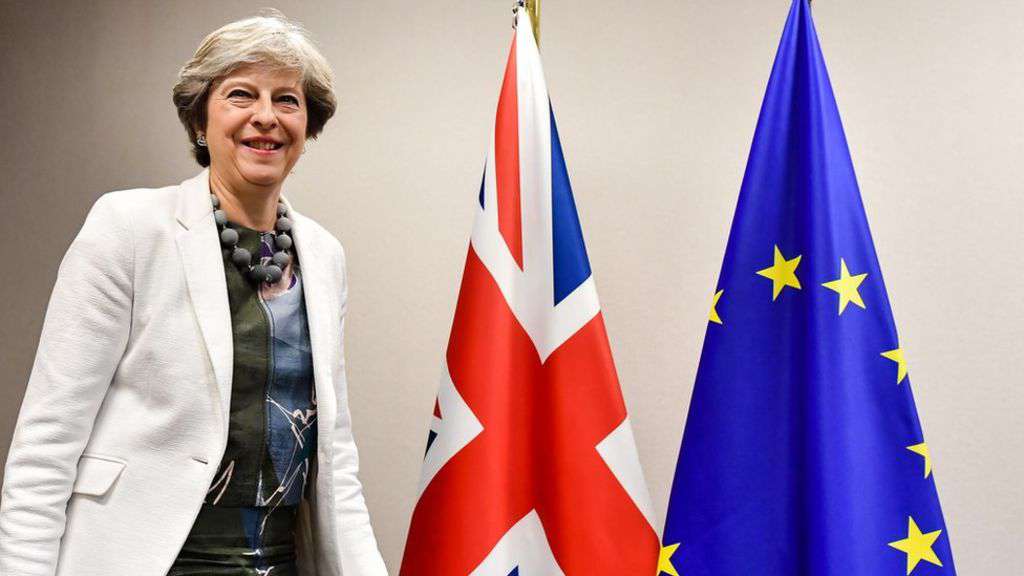
Image copyright AFP Image caption Theresa May has been meeting with EU leaders in Brussels
EU leaders refused to comment on the Brexit tensions inside Theresa May’s Conservative Party, but some might say this was the elephant in the room at the Brussels summit.
For decades the UK’s disputes with the EU have mainly centred on British payments to Brussels. And now Brexit is that writ large.
In 1979, then-PM Margaret Thatcher famously told EU leaders: “I want my money back”. And many Conservatives still fondly remember her stand against Brussels, which won the UK an ongoing budget rebate of several billion pounds annually.
Given that turbulent history, it is no surprise that EU leaders sought to put a positive spin on the complicated Brexit negotiations.
- Reality Check: How are the Brexit talks actually going?
- Tell EU you’ll walk away, Eurosceptics tell May
- Brexit: How do other EU countries see a ‘no deal’?
They dismissed talk of a “no-deal” scenario – despite intense speculation in the UK about just such a scenario becoming reality in 2019.
Nicknamed the Brexit “cliff edge”, that scenario would mean World Trade Organization (WTO) rules, with the EU imposing tariffs and barriers on the UK’s vital services sector.
They assured Mrs May of their determination to make progress before a key December summit, and they will discuss among themselves what sort of trade partnership they could have with the UK post-Brexit.
New mood music
But German Chancellor Angela Merkel stressed the difficulty of getting 27 EU nations to agree on new trade terms.
Mrs May’s election losses in June left her heading a government reliant on support from right-wing Northern Ireland politicians. Her EU partners know that she is much weakened, but they also know how strong the Leave camp is in the UK, so they want a deal with her.
Image copyright AFP Image caption Angela Merkel (speaking to Donald Tusk) stressed a deal would be difficult
European Council President Donald Tusk said they had managed to “rebuild this atmosphere of trust and goodwill” with Mrs May, helped by her recent Florence speech.
Commission President Jean-Claude Juncker said “we are doing all we can to reach a correct, balanced, fair arrangement with the UK”.
But he also had some sharp words for the British negotiators.
“I hate the no-deal scenario and nobody knows what that means,” he told a news conference. “No member of the UK delegation explained what it meant.”
Show me the money
The real haggling over UK commitments to EU finances is only just beginning.
Mrs Merkel said moving to “Phase Two” – trade and the future EU-UK relationship – “depends how much the UK makes progress possible – especially the financial settlement is the top issue”.
The clock is ticking, as the UK has to leave at the end of March 2019, and international trade deals are notoriously difficult to negotiate.
The EU-Canada Ceta deal took seven years to negotiate, and was nearly scuppered at the last moment by MPs in Belgium’s Wallonia region.
Media playback is unsupported on your device Media captionThree key points about how the Brexit talks are going
Mrs May said the UK would “honour the commitments we made in our membership” – but still avoided specifying what her government sees as UK commitments to the EU. So far there is no advance on 20bn euros (£18bn; $23.6bn), a figure already attributed to her.
The so-called divorce bill requires detailed work, going through the figures “line by line”, she said. “The British taxpayer wouldn’t expect anything else.”
But in contrast with the gloomy reports of Brexit “impasse” in the British media recently, Mrs Merkel was upbeat. She saw no reason why the EU’s three priorities – citizens’ rights, the Northern Ireland border and the financial settlement – could not be resolved, to allow trade talks to start within months.
Mrs May said negotiators were “in touching distance of an agreement” on the thorny issue of citizens’ rights.
But the powers of the European Court of Justice (ECJ) in a post-Brexit UK remain unclear – along with so much else besides.